
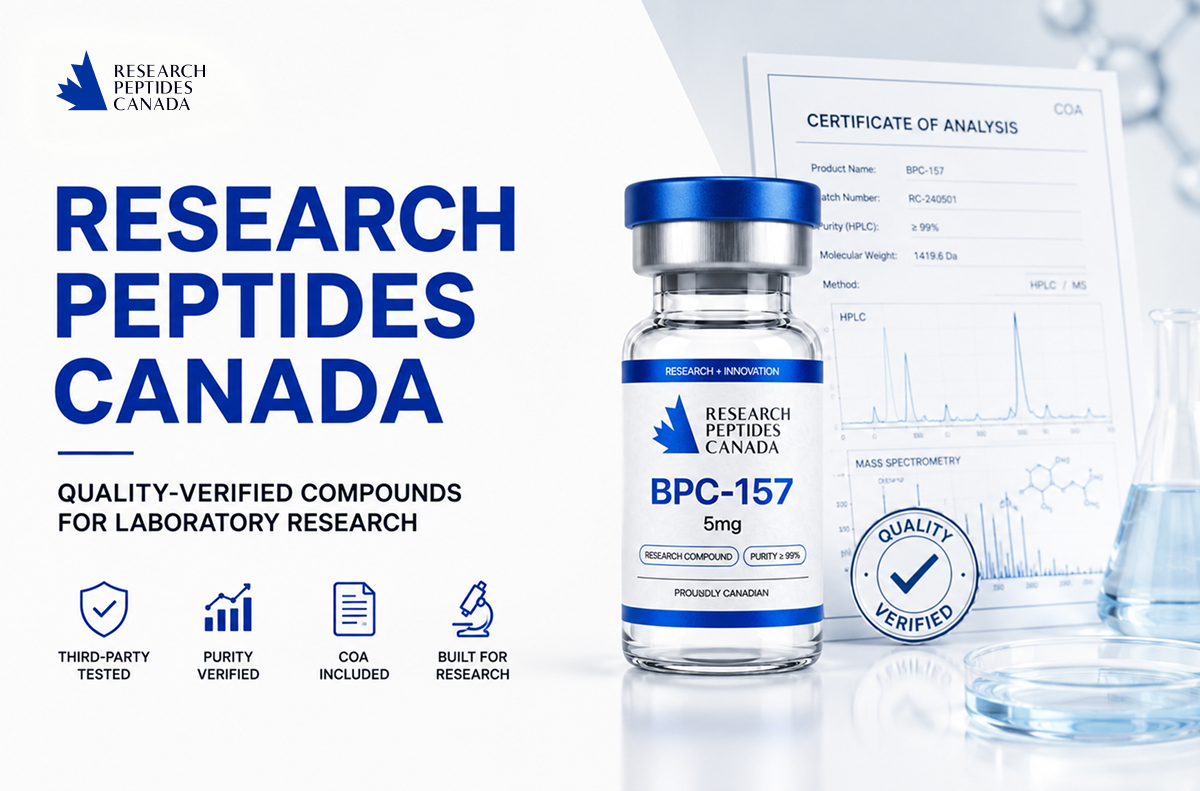


Peptide research has become increasingly important across molecular biology, biochemistry, metabolic science, neuroscience, cellular signalling, and analytical chemistry. As laboratories expand their work in these areas, researchers need more than access to compounds. They also need reliable product identification, clear purity information, appropriate batch documentation, and consistent storage and handling guidance.
For researchers searching for Research Peptides Canada, quality should be evaluated through evidence rather than marketing claims alone. A peptide may be advertised with a high purity percentage, but laboratories should also consider identity testing, batch traceability, analytical methods, storage conditions, and the suitability of the compound for a specific research model.
Choosing appropriate research materials is particularly important when experiments depend on accurate concentrations or highly sensitive biological endpoints. Even small differences in peptide composition, degradation, or handling may affect reproducibility.
This guide explains what research peptides are, the major research categories available to Canadian laboratories, how quality and purity are evaluated, what Research Use Only standards mean, and what researchers should consider when ordering laboratory compounds across Canada.
What Are Research Peptides?
Research peptides are short chains of amino acids used in controlled laboratory investigations. Amino acids are linked together through peptide bonds, producing molecules that can vary significantly in sequence, molecular weight, structure, stability, and biological activity.
Peptides occupy an important position between small molecules and larger proteins. Because many naturally occurring biological signals are peptide-based, synthetic peptides can be useful tools for investigating cellular communication and biochemical pathways.
Depending on the compound and experimental model, researchers may examine:
- Receptor activation
- Cellular signalling pathways
- Enzyme activity
- Gene expression
- Mitochondrial function
- Metabolic regulation
- Tissue-response pathways
- Neurochemical signalling
- Protein interactions
- Peptide stability and degradation
However, not every peptide produces the same type of biological response. Some peptides interact with membrane receptors, while others may influence intracellular pathways or provide useful analytical reference material.
Researchers comparing Research Peptides Canada products should therefore examine each compound individually rather than treating all peptides as interchangeable.
The term “research peptide” also refers primarily to the context in which a compound is supplied. It does not automatically define a pharmaceutical, therapeutic, or clinical application.
Laboratory research materials should be selected according to the experimental question, analytical requirements, and institutional protocols involved.
Browse our full selection of research compounds, review available product details, and find materials suited to your laboratory research needs. Shop Research Peptides Canada
Explore Research Peptides Available in Canada
Canadian laboratories can investigate a wide variety of compounds associated with metabolic, endocrine, neurological, mitochondrial, and tissue-response research.
When exploring Research Peptides Canada, the most important step is to match the compound to the intended research objective.
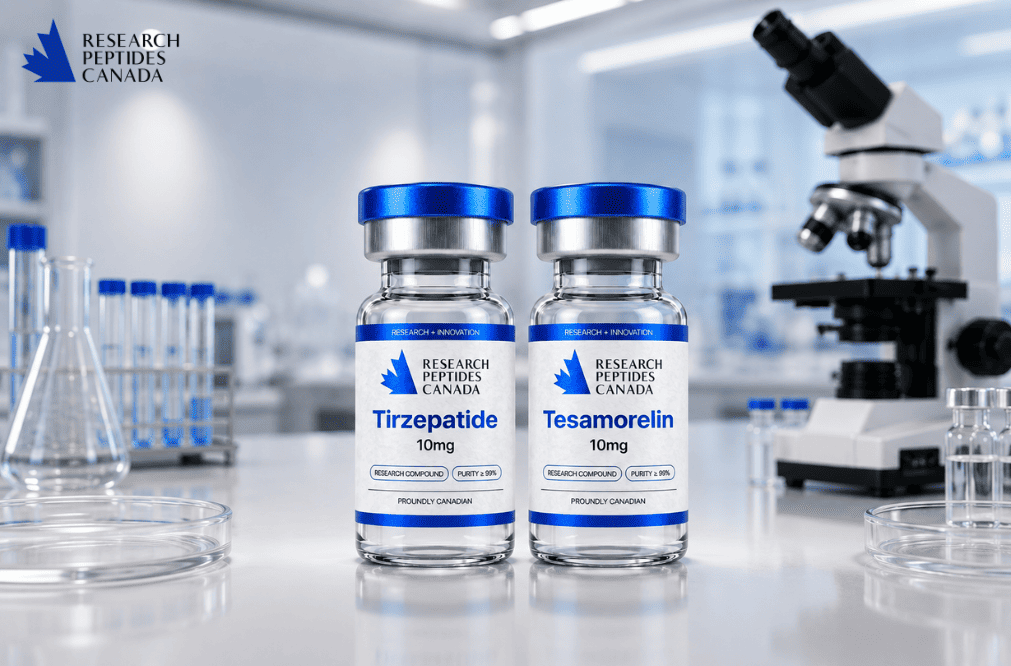
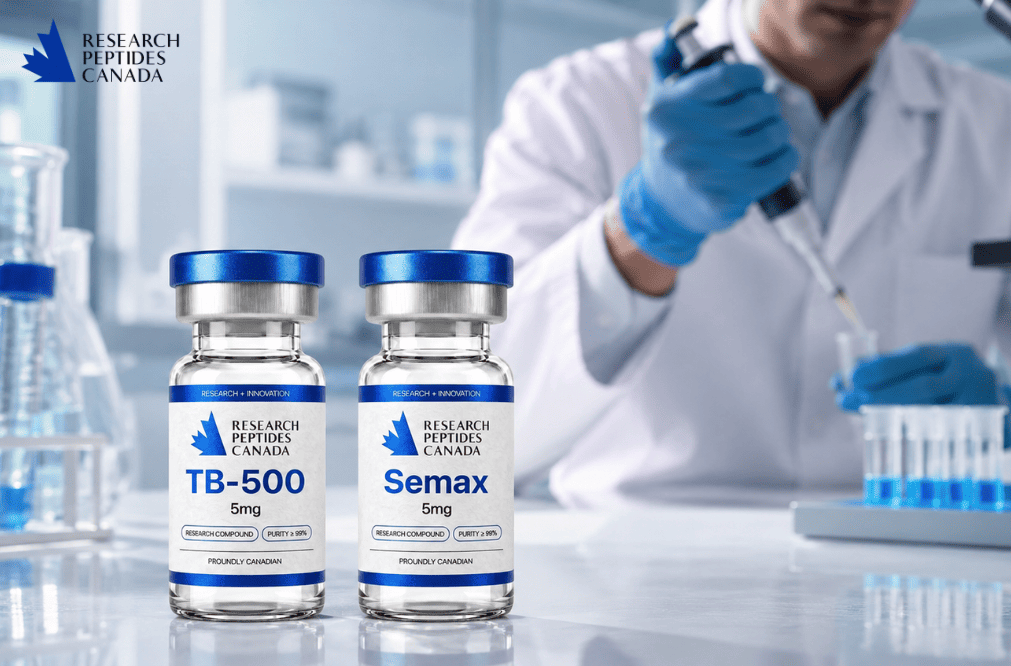
Common research compounds may include peptides such as BPC-157, TB-500, GHK-Cu, Tesamorelin, Semax, Selank, MOTS-c, Kisspeptin, CJC-1295, and other synthetic or naturally derived peptide sequences.
Some research catalogues may also include compounds that are closely associated with peptide research but are not technically peptides. NAD+, for example, is an important cellular coenzyme rather than an amino-acid peptide.
This distinction matters because chemical classification affects how researchers interpret molecular weight, solubility, stability, and analytical data.
Before choosing a compound, laboratories should review several product characteristics:
- Compound or peptide name
- Amino-acid sequence, when relevant
- Molecular weight
- Molecular formula
- Physical form
- Nominal vial quantity
- Purity results
- Lot or batch number
- Certificate of Analysis
- Recommended storage conditions
Reliable Research Peptides Canada sourcing should make these characteristics as transparent as possible.
Product strength alone should not determine purchasing decisions. Two vials with the same listed milligram quantity may differ in purity, salt content, residual moisture, degradation profile, or documentation quality.
For research environments where reproducibility is critical, these details can influence how easily experimental results can be compared across batches or replicated by other laboratories.
Research Peptide Categories and Applications
Research peptides can be grouped according to the biological pathways or experimental systems they are commonly used to investigate.
These categories are not absolute. A single peptide may interact with several systems and therefore appear in more than one research area.
| Research Category | Common Laboratory Focus | Example Measurements |
|---|---|---|
| Metabolic Research | Glucose signalling, energy pathways, receptor activity | Gene expression, receptor response |
| Growth and Endocrine Research | Hormonal signalling and peptide receptors | Biomarkers, receptor activation |
| Tissue-Response Research | Cell migration and signalling | Migration assays, protein expression |
| Neurobiology | Neurochemical and neuronal pathways | Cell signalling, receptor activity |
| Mitochondrial Research | Cellular energy and stress pathways | ATP-related markers, oxidative signalling |
| Analytical Research | Peptide identity, degradation, purity | HPLC, LC-MS, stability testing |
Metabolic Signalling Research
Certain peptides are investigated because of their interactions with metabolic receptors or cellular energy pathways.
Researchers may examine receptor activation, glucose-related signalling, lipid metabolism, mitochondrial activity, or downstream gene-expression changes.
The purpose of these studies is to understand mechanisms under controlled laboratory conditions rather than to assume therapeutic outcomes.
Tissue-Response Research
Other compounds are studied in models involving cell migration, extracellular matrix signalling, vascular responses, or cellular repair mechanisms.
Experimental outcomes can depend heavily on the research model.
For example, results obtained in cultured cells cannot automatically be extrapolated to animals or humans.
Neurobiology Research
Compounds such as Semax and Selank are frequently discussed in neuropeptide research.
Researchers may investigate receptor interactions, neurochemical signalling, gene expression, stress-response pathways, or neurotrophic factors.
When reviewing Research Peptides Canada materials in this category, it is important to separate laboratory findings from claims about cognition, mood, or neurological treatment.
Mitochondrial Peptide Research
Mitochondrial-derived peptides such as MOTS-c have attracted interest because mitochondria play central roles in energy production, cellular signalling, and stress responses.
Research may examine how these peptides influence metabolic pathways or cellular adaptation under controlled experimental conditions.
A well-organized Research Peptides Canada catalogue should help users identify these research categories without turning experimental mechanisms into unsupported health claims.
Quality, Purity, and Batch Documentation
Quality is one of the most important factors when purchasing laboratory peptides.
Purity percentage is useful, but it should never be interpreted as the only indicator of product quality.
Researchers considering Research Peptides Canada suppliers should evaluate several complementary forms of analytical documentation.
High-Performance Liquid Chromatography
High-Performance Liquid Chromatography, commonly known as HPLC, is frequently used to evaluate peptide purity.
During HPLC analysis, components in a sample are separated according to their interactions with the chromatographic system.
A chromatogram displays peaks associated with different components.
The main peptide peak may represent most of the detected chromatographic material, while smaller peaks can indicate related impurities or degradation products.
However, an HPLC purity result of 99% does not necessarily mean that 99% of the total vial weight consists of pure peptide.
HPLC peak-area percentage generally describes the relative chromatographic composition detected under specific analytical conditions.
Other components may include:
- Water
- Salts
- Counter-ions
- Residual solvents
- Non-UV-active materials
Therefore, researchers should interpret purity results in context.
Mass Spectrometry
Mass spectrometry provides another important layer of peptide characterization.
Techniques such as LC-MS can measure mass-to-charge ratios and help determine whether the detected molecular mass is consistent with the expected peptide.
HPLC and mass spectrometry answer different questions.
HPLC primarily helps evaluate chromatographic purity, while mass spectrometry provides evidence supporting molecular identity.
For Research Peptides Canada purchasing, the combination of HPLC and MS information can provide stronger confidence than either method alone.
Certificate of Analysis
A Certificate of Analysis, or COA, summarizes quality information associated with a product or batch.
A useful peptide COA may include:
- Product name
- Batch or lot number
- Testing date
- Purity percentage
- Analytical method
- Molecular mass data
- Appearance
- Storage information
- Testing laboratory information
The most useful documentation is batch-specific.
A generic example COA can demonstrate what a supplier tests, but it does not necessarily confirm that the purchased vial belongs to the same tested batch.
Researchers evaluating Research Peptides Canada should therefore prioritize traceable documents linked to individual production lots.
Browse our full selection of research compounds, review available product details, and find materials suited to your laboratory research needs. Shop Research Peptides Canada
Why Peptide Purity Is Only One Quality Factor
A common mistake in peptide sourcing is assuming that the product with the highest advertised purity percentage must automatically be the best research material.
Quality is more complex.
Synthetic peptide manufacturing can produce several types of impurities, including truncated sequences, deletion sequences, oxidation products, synthesis by-products, or chemically modified variants.
Storage conditions may also cause degradation after production.
As a result, laboratories should consider several separate quality attributes:
| Quality Attribute | What It Helps Evaluate |
|---|---|
| Purity | Relative amount of peptide-associated material |
| Identity | Whether the expected compound is present |
| Quantity | Amount of material supplied |
| Stability | Resistance to degradation |
| Batch Traceability | Ability to connect testing with a specific vial |
| Documentation | Availability of analytical evidence |
A high purity value without identity confirmation is incomplete evidence.
Likewise, mass spectrometry showing an expected molecular mass does not necessarily provide a complete impurity profile.
For this reason, Research Peptides Canada purchasing should be based on the combined quality picture.
Good laboratory practice also includes recording supplier information, lot numbers, receiving dates, storage history, and preparation dates.
These records can be especially useful when researchers compare experimental results generated from different batches.
Research-Use-Only Product Standards in Canada
Research Use Only, often abbreviated as RUO, indicates that a product is intended for laboratory investigation rather than personal or therapeutic use.
This distinction is especially important in the Canadian market.
A legitimate Research Peptides Canada product should be presented clearly as a laboratory material and should not be promoted with instructions for human dosing, injection, treatment, or self-administration.
Research-oriented product information should focus on topics such as:
- Molecular identity
- Chemical characteristics
- Analytical purity
- Experimental mechanisms
- Research applications
- Storage requirements
- Laboratory handling
- Published scientific research
Researchers should also understand that placing “Research Use Only” on a product does not automatically determine its regulatory status.
Canadian regulations can depend on how a product is presented, marketed, imported, distributed, or used.
Health Canada has taken enforcement action against unauthorized peptide products marketed for human use, particularly when products are promoted as treatments or injectable drugs.
For this reason, reputable Research Peptides Canada content should maintain a clear boundary between laboratory information and medical claims.
Researchers, institutions, and organizations should also confirm whether their planned work requires specific regulatory, institutional, biosafety, ethics, or import approvals.
Storage and Handling of Research Peptides
Proper storage is essential for maintaining peptide integrity.
Peptides can be sensitive to heat, moisture, light, oxidation, and repeated temperature changes.
The ideal storage condition depends on the compound, formulation, and manufacturer documentation.
Lyophilized peptides are generally more stable than prepared solutions because removing water can reduce many degradation pathways.
However, lyophilization does not mean that a peptide is indefinitely stable.
Laboratories ordering through Research Peptides Canada should always review compound-specific storage guidance.
Important handling practices may include:
- Keeping containers tightly sealed
- Minimizing moisture exposure
- Protecting light-sensitive compounds
- Avoiding unnecessary temperature cycling
- Recording preparation dates
- Limiting repeated freeze-thaw cycles
- Using appropriate laboratory-grade solvents
- Maintaining clean handling procedures
Once a peptide is prepared in solution, stability can change significantly.
Hydrolysis, oxidation, aggregation, or adsorption to laboratory surfaces may become more relevant.
As a result, prepared solutions should be handled according to validated experimental protocols rather than general assumptions.
Good storage practice improves the likelihood that researchers are testing the intended material rather than a partially degraded sample.
Ordering Research Peptides Across Canada
Ordering laboratory peptides should be treated as part of the experimental quality-control process.
Before placing an order with a Research Peptides Canada supplier, researchers should define what they need and how the material will be used.
A practical purchasing workflow can include the following steps.
1. Define the Research Objective
Start with a specific scientific question.
The selected compound should match the experimental pathway, receptor, cell model, or analytical target being investigated.
2. Confirm Product Identity
Review the exact product name, molecular information, peptide sequence when available, and listed quantity.
This reduces the risk of ordering the wrong analogue or molecular form.
3. Review Analytical Documentation
Check whether HPLC, mass spectrometry, COA, or other batch information is available.
For Research Peptides Canada, stronger documentation means researchers can evaluate the material more effectively before beginning an experiment.
4. Check Storage Requirements
Determine how the compound should be stored immediately after receiving it.
Laboratories should have appropriate storage equipment available before ordering temperature-sensitive research materials.
5. Inspect the Shipment
After delivery, researchers should verify:
- Product identity
- Packaging integrity
- Lot number
- Quantity
- Documentation
- Storage condition
Any unusual packaging damage should be documented.
6. Maintain Laboratory Records
Record the batch number used in each experiment.
If different batches are used over time, laboratories can then investigate whether batch variation contributes to unexpected results.
Canada covers a large geographic area with substantial seasonal temperature differences.
Therefore, shipping conditions and receiving procedures may become particularly important for temperature-sensitive compounds.
A reliable Research Peptides Canada purchasing strategy should consider shipping as part of the quality chain rather than treating delivery as an unrelated logistical step.
Why Choose Research Peptides Canada?
Selecting a research supplier is ultimately about reducing uncertainty.
Researchers need confidence that the compound received corresponds to the compound described in the catalogue.
A strong Research Peptides Canada supplier should support that goal through transparent product information, traceable batches, clear quality documentation, and laboratory-focused communication.
Key factors researchers should look for include:
Transparent Product Information
Each product should clearly identify the compound, quantity, and relevant molecular information.
Researchers should not have to rely solely on promotional descriptions.
Batch Documentation
Lot-specific documentation allows researchers to link experimental data back to the material used.
This is especially valuable for reproducibility.
Analytical Verification
HPLC and mass-spectrometry information can help laboratories evaluate purity and identity before incorporating a material into experimental workflows.
Research-Focused Education
Good suppliers do more than list products.
They also help researchers understand topics such as:
- Peptide purity
- Certificate of Analysis interpretation
- HPLC testing
- Mass-spectrometry testing
- Peptide storage
- Compound stability
- Batch traceability
Canadian Accessibility
For Canadian laboratories, local availability can simplify procurement, shipping planning, and receiving procedures.
However, purchasers should still verify shipping terms, regulatory requirements, and institutional policies before ordering.
Ultimately, Research Peptides Canada should be evaluated using the same standards applied to any laboratory reagent: identity, documentation, traceability, stability, and suitability for the intended research model.
Better-characterized materials cannot guarantee a specific experimental result. However, they can reduce avoidable uncertainty and improve confidence in the data generated from a study.
Frequently Asked Questions About Research Peptides Canada
What are research peptides used for?
Research peptides are used in controlled laboratory experiments involving areas such as cellular signalling, metabolism, receptor biology, neuroscience, mitochondrial research, and analytical chemistry. Their role depends on the specific peptide and research model.
What purity level should researchers look for?
There is no single purity value appropriate for every experiment. Many laboratories prefer highly purified materials, but purity percentage should be considered alongside identity testing, COA documentation, batch traceability, and the analytical method used.
Does 99% purity mean the vial contains 99% peptide by weight?
Not necessarily. A reported HPLC purity of 99% often means that approximately 99% of the detected chromatographic peak area corresponds to the primary component under the test conditions. It does not automatically describe total peptide content by vial weight.
Why is mass spectrometry important?
Mass spectrometry helps determine whether the detected molecular mass is consistent with the expected compound. This provides evidence supporting peptide identity.
What should a peptide COA contain?
A useful COA may contain the product name, lot number, testing date, analytical methods, purity results, molecular-mass information, appearance, and other relevant quality data. Batch-specific documents are generally more useful than generic sample reports.
Are Research Use Only products intended for human use?
No. Products supplied specifically for laboratory research should not be interpreted as products for human or veterinary administration.
How should peptides be stored?
Storage requirements vary by peptide. Researchers should follow product-specific guidance and pay attention to temperature, moisture, light exposure, oxidation, and freeze-thaw cycles.
Why does batch traceability matter?
Batch traceability allows laboratories to identify exactly which material was used in an experiment. If unexpected results occur, researchers can determine whether a batch difference may have contributed to the variation.
How should I evaluate a Research Peptides Canada supplier?
Review product identification, analytical documentation, lot traceability, storage information, research-use positioning, and the transparency of the supplier’s quality information. The strongest purchasing decisions are based on evidence rather than marketing language.
Conclusion
The Canadian research peptide market is growing alongside scientific interest in metabolism, receptor biology, mitochondrial signalling, neurobiology, and peptide chemistry.
Researchers evaluating Research Peptides Canada should prioritize compound identity, purity, batch documentation, storage, and traceable laboratory handling. HPLC can assess chromatographic purity, while mass spectrometry can help confirm molecular identity, with a COA linking these results to a specific batch.
Research peptides should also remain clearly separated from products intended for personal or therapeutic use.
By choosing Research Peptides Canada responsibly, researchers can reduce variability, improve reproducibility, and maintain better laboratory standards.
Disclaimer: The information and products discussed on this website are intended strictly for laboratory research and educational purposes only. They are not intended for human or veterinary use, diagnosis, treatment, prevention, or any form of clinical application.
3 Comments
This is a really useful guide, especially the explanation of why purity percentage alone isn’t enough when evaluating research peptides. I also liked the section on batch-specific COAs.
I found the comparison between HPLC and mass spectrometry particularly helpful. It’s easy to assume that a high HPLC purity number automatically confirms the identity of a compound, so this clarification was valuable.
I really appreciate that the article emphasizes reproducibility rather than focusing only on advertised purity levels. The discussion about storage conditions and temperature changes was also interesting, particularly for labs receiving temperature-sensitive materials across Canada. Do you think shipping conditions should be considered part of the overall quality-control process?